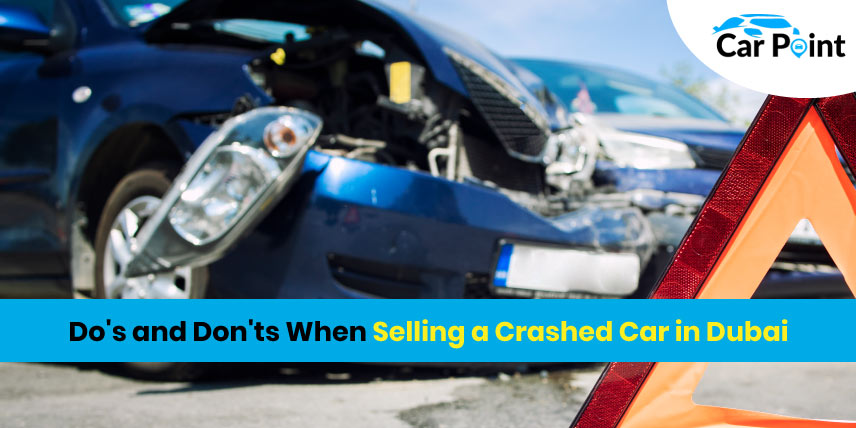
Do's and Don'ts When Selling a Crashed Car in Dubai
Vehicle sales, particularly those of crashed cars, in Dubai can be more challenging than sales of vehicles that have not been involved in accidents. You may find you will have to deal with paperwork, insurance, damage assessment, and perhaps even the process of transferring ownership of the vehicle.
However, the fact that the vehicle has been in an accident does not mean that it has no resale value. Depending on how badly the vehicle has been damaged, you may even find that it remains viable for repair, resale, scrapping, or the extraction of parts.
The crucial thing is to understand the options available to you before making a decision about the offer presented to you. By choosing the right buyer, providing truthful information, comparing different valuations, and checking documents, you stand less of a chance of running into trouble.
In this article, we set out the important rules and recommendations to keep in mind when selling a wrecked vehicle in Dubai, including how to determine its value, protect yourself from fraudsters, and ensure a secure transaction.
What Should You Do Before Selling a Crashed Car in Dubai?
There is more to contacting crash car buyers than just picking up the phone. Make sure you know the condition of your vehicle well enough to get the offer you need.
1. Assess the Damage to Your Vehicle
First things first, find out the extent of the damage to your vehicle. Minor body damage means that your vehicle can be repaired, while serious structural damage and mechanical problems might make repairs impractical.
Here are some suggestions:
- Check for exterior damage: Verify the condition of the bumpers, doors, windows, lights, and body panels.
- Evaluate for structural damage: Identify if the chassis or any important parts have been damaged.
- Examine the engine and transmission: Determine how the accident impacted the engine, transmission, and other mechanical components.
- Review electrical systems: Assess any damage to the wiring, sensors, airbags, and electronic systems.
- Inspect the interior: Check the condition of the seating, dashboard, safety systems, and other interior elements.
Do not drive the vehicle until damage evaluation has been conducted and verified.
2. Do Check Your Insurance and Accident Documents
Pulling off a sale of a damaged auto begins with the process of reviewing your insurance documents to check whether any accident claim is pending.
If the accident was reported to the insurance company or the police, keep the paperwork handy. This includes:
- Police or accident report.
- Details of the insurance policy.
- Reference number and communication records with the insurance company.
- Cost of damages or the estimate of the repairs.
- Any paperwork related to the total loss claim from the insurance company.
If the insurance company has declared the vehicle a total loss, you should ascertain the conditions of the claim and whether you have to complete the process of transferring ownership through the insurance company.
Before you think of transferring the title of the vehicle post-insurance settlement, be informed that there are certain necessary things involved in selling a vehicle depending on the outcome of the claim, ownership, and whether any conditions have been imposed by the insurance company.
3. Do Get a Realistic Valuation for Your Crashed Car
Understanding the potential worth of your damaged vehicle is among the most crucial things you must do.
The value of a wrecked vehicle depends on various aspects, such as its brand, model, year, mileage, accident history, mechanical condition, and demand for its usable parts.
You should check a couple of proposals before you choose the place to sell your car.
You must give precise information when requesting the evaluation process, including:
- Car model, brand, and year of production.
- Current mileage.
- Details about the accident and the extent.
- Absence or presence of engine malfunction.
- Indication of whether the car is running or not.
While an online evaluation can help you obtain an approximate idea of the car’s value, the final price may change based on the analysis conducted by the buyer.
You can also use the CarPoint online car valuation service to submit your vehicle details and request an initial estimate.
4. Compare Different Types of Car Buyers
Not all buyers treat cars that have been in an accident the same way. For some of them, repairable vehicles will be interesting, other will be focused on salvage vehicles, spare parts or scrap.
You can ask the following buyers for help:
- Used car dealerships: Some of these dealerships might be interested in wrecked cars that can still be repaired and sold.
- Professional car buyers. These companies might take into account the different conditions of the cars they buy and will have different criteria for the purchase.
- Salvage buyers. These companies may be interested in vehicles that have large damage or parts that can be sold.
- Scrap car buyers. These buyers focus mostly on cars that cannot be repaired economically anymore or resold as used ones.
You can ask every buyer if they accept your car with a specific type of damage. It will save time and let you compare the offers of different businesses.
What Should You Avoid When Selling a Crashed Car in Dubai?
Understanding what should not be done is equally essential to preparing your vehicle correctly. Hasty decisions, incomplete information, and unclear financial commitment make things difficult.
5. Don’t Conceal Damage from Your Accident or Mechanical Issues
When it comes to your vehicle’s sale, always be upfront about the known damage in your vehicle.
Do not claim that the vehicle in question is in good condition if there is structural damage, engine issues, deployment of airbags, or other major defects.
You never know that failing to make a disclosure may result in disputes between you and the buyer during the car inspection. You may also expect a revision of the offer or cancellation of the transaction.
Instead:
- Describe what exactly took place in an accident situation.
- Discuss all relevant accident paperwork and inspection reports.
- Point out any damage that has been fixed and any damage that remains unrepaired.
- Give sufficient photos of the affected areas.
- Talk about whether the vehicle is drivable, that is, whether it starts and moves, or is it in need of an expensive recovery.
A high level of transparency allows buyers to get adequate information about the vehicle and agree on the terms during the purchasing process.
6. Don't Accept the First Offer Without Comparing It
The sale of a wrecked vehicle can take place in a hurry, especially if the car in question takes up precious parking space or cannot be driven anymore. However, if a customer accepts the first offer without considering other alternatives, he can end up with something less appropriate.
It is important to contact several potential buyers to receive non-obligatory quotes. Seek to find out the following from all the offers you receive:
- The price offered by the buyer;
- If the quotation is subject to vehicle inspection;
- Fees for towing/recovery transportation;
- Any additional processing and administrative charges;
- The payment method and time of payment;
- Who is responsible for any paperwork;
It should be noted that the invoice does not guarantee anything, since the buyer may decide to reduce it. Always make sure you ask for all the mentioned points in writing.
7. Don't Spend Money on Repairs Without Checking the Potential Return
Repairing a damaged vehicle before putting it up for sale can be an option, but sometimes repairs can be expensive. For instance, repairs such as an engine replacement, fixing structural damage, and restoring airbags can be very costly. Even if you pay for repairs, the resale value may not be worth it.
Make sure that before you decide to repair your damaged vehicle, you take the following steps:
- Get a quote for repairs from a reputable garage.
- Look into what the car's potential resale value is after repairs.
- Make comparisons between the future value of your vehicle and the current prices for damaged cars.
- Think about whether the repairs will make the vehicle safe for resale.
- Make sure to ask your insurance provider about any requirements regarding this type of vehicle.
- If the repair costs are more than the expected value of the vehicle, selling the car without repairs will be more beneficial.
8. Don't Ignore the Buyer's Payment and Collection Terms
Before you give your car away, ensure that you know how the buyer will settle the payment and collect the vehicle.
Do not just take the buyer’s word or rely on the screenshot as proof of payment. Make sure that you receive the money in your account first, according to the procedures that you have agreed on, before continuing with the transaction.
If the vehicle is not drivable, ask the buyer if he can deal with recovery and towing.
Double-check the details below:
- When and where will the vehicle be picked up?
- Is the price already including towing?
- Will there be any deductions from the amount?
- How will the payment be made?
- When will you receive the payment?
- What will be the confirmation of payment?
Can You Sell a Crashed Car in Dubai Without Repairing It?
Depending on the condition of the car and the ownership situation, it might be possible to sell a junk car as is.
Some buyers are open to accidents because they are aware that it might be possible to repair a damaged vehicle or salvage parts that are still usable. Others may want only vehicles that can be recycled or scrapped.
To confirm whether the potential buyer is willing to take the car in its current condition, describe the damage to the car and ask them if they take cars that are:
- Damaged in an accident but repairable.
- Have engine or transmission issues.
- Can’t run or require towing.
- Damaged due to flooding.
- Total loss according to insurance.
- Good for salvage only.
Don't assume that all buyers will take damaged vehicles. Find out in advance.
Should You Sell a Crashed Car for Parts or as a Complete Vehicle?
The optimal choice will depend upon the condition of the vehicle alongside the specifics of its remaining components.
A smashed vehicle has the possibility of receiving some functional components such as the transmission system, engine, tires, seats, electronic devices, or the body panels. If these components are intact and desired, they may provide a significant contribution to the car's salvage price.
You have two options:
- 1. Sell the whole car: This may make everything easier since you will conduct only one selling process with only one buyer who will receive the car as it is and offer you a price depending on the current condition and usability of the vehicle.
- 2. Think about the option of parts sale: The option should be examined in a case where your vehicle has some decent parts. Dismantling and selling parts takes a lot of time, as there are extra requirements for storage, transportation, and regulations.
Before making a decision, however, you should know how much you can earn.
How Can You Avoid Scams When Selling a Crashed Car in Dubai?
Vehicles that have been damaged in accidents may appeal to various buyers. Thus, it is you who should know about your interlocutor and the deal you are going to conclude.
Take the following precautions:
Check the seller's business information and feedback.
- Deal only with those buyers who do not push you to make an instant decision.
- Do not agree to any advance payment without receiving an explanation.
- Have the price and deductions confirmed in writing.
- Ensure that the money has actually been credited to your account prior to giving the car away.
- Do not sign incomplete documents or vague agreements.
- Make copies of payment and transaction records.
- Learn how ownership transfer or deregistration will be done.
If the buyer organizes vehicle pickup, make sure that you know what happens next. Take delivery documentation and make sure that all necessary administrative procedures have been done.
Conclusion
Selling a damaged car in Dubai can be a complicated process. But it does not have to be the case because it is not a prerequisite to fix the vehicle.
The first thing to do is to refer to the insurance documents and assess the car’s damage.
Next, you should compare the evaluations from different potential buyers in order to find out the true market price of your car.
Most importantly, it is necessary to comprehend the legal procedures and requirements regarding ownership transfer or deregistration of the car.